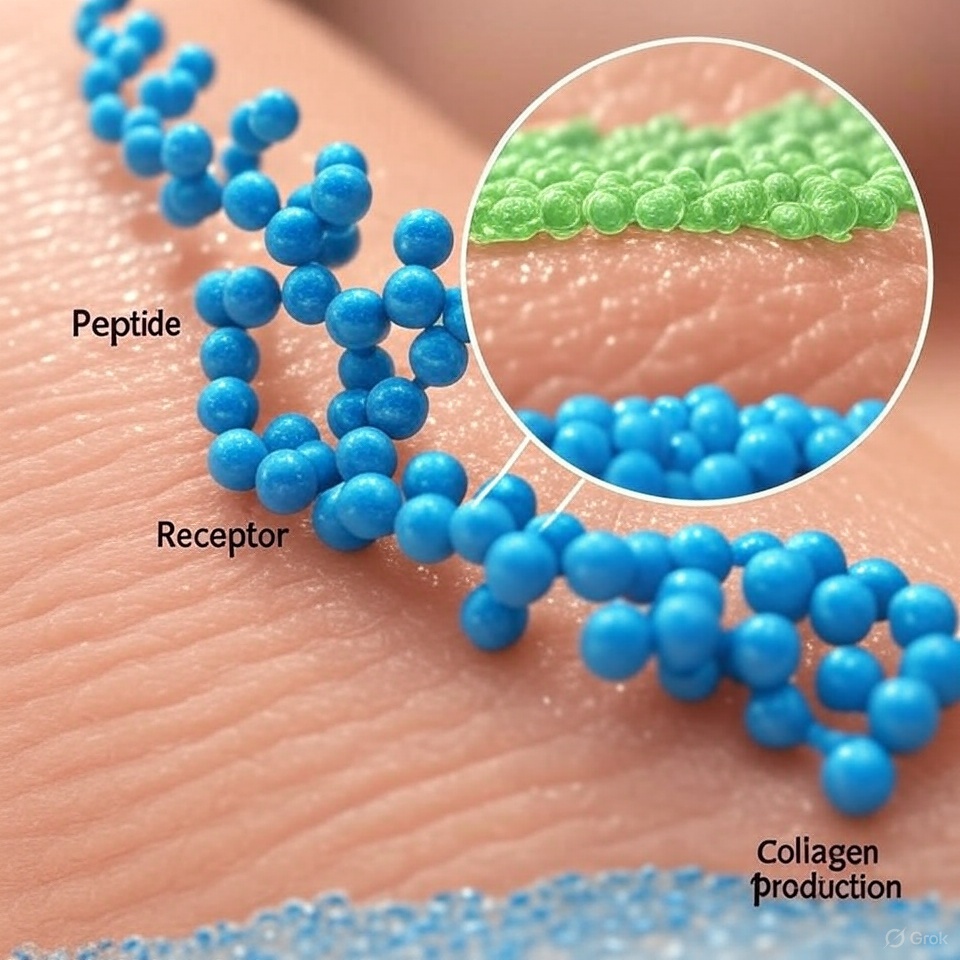






Let’s be honest, you’ve seen it. That celebrity who seemed to magically shed 30 pounds between movie premieres. The TV personality who suddenly looks leaner and more defined than they did in their twenties. When asked for their secret, they’ll usually credit a newfound love for kale and a rigorous Pilates routine. And while that’s probably part of the story, there’s often another, more interesting character playing a lead role behind the scenes: a tiny, powerful molecule known as a peptide.
The word on everyone’s lips right now is Ozempic. It’s become the shorthand for a new era of weight loss, a revolution supercharged by a seemingly endless parade of celebrity endorsements. But here’s the real Hollywood secret: the conversation in the most exclusive wellness clinics and among A-list biohackers has already moved on. While the public is focused on a single drug for getting smaller, the elite are focused on something far more sophisticated: getting sculpted.
They’re not just losing weight; they’re performing a biological magic trick called body recomposition—losing fat while simultaneously holding onto, or even building, precious muscle. And they’re doing it by “stacking” different types of peptides. Welcome to the next level of wellness, where the goal isn’t just to shrink, but to reshape.
How a Diabetes Drug Became Hollywood’s Favorite Accessory
It’s impossible to talk about modern weight loss without talking about the class of drugs that gate-crashed the party: glucagon-like peptide-1 (GLP-1) receptor agonists. You know them by their brand names—Ozempic, Wegovy, Mounjaro, and Zepbound—which have become as common in celebrity gossip columns as designer handbags.
The wave of celebrity adopters has been nothing short of staggering. Comedian Tracy Morgan candidly shared that the injections help curb his appetite, making it easier to maintain his physique. Tech titan Elon Musk combined them with fasting for his own transformation, while TV stars like Dolores Catania and Lauren Manzo reported losing 20 and 50 pounds, respectively. The movement hit a cultural crescendo when titans of media like Oprah Winfrey, Whoopi Goldberg, and Sunny Hostin shared their own positive experiences, reframing the drugs as legitimate tools for managing health.
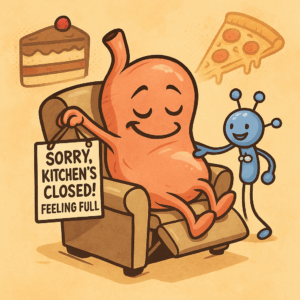
So, how does this “magic shot” work? It’s actually quite clever. These peptides mimic a hormone your gut naturally releases after you eat. This hormone tells your brain, “Hey, we’re full down here!” It also slows down how quickly your stomach empties, meaning you feel satisfied for much longer. The result? Your appetite takes a nosedive, you eat less, and the pounds start to melt away. It’s a simple, powerful mechanism that has turned the weight loss world on its head.
The “But”: The Skinny-Fat Secret Nobody Talks About
Here comes the part of the story that doesn’t make it into the glossy magazine spreads. When you lose weight rapidly, especially just by eating less, your body doesn’t just burn fat. It starts cannibalizing your muscle, too. This condition, known as sarcopenia, is the unspoken downside of the Ozempic revolution.
Why does this matter? Because muscle is your metabolic engine. It burns calories even when you’re sitting on the couch watching Netflix. When you lose muscle, your metabolism slows down, making it incredibly easy to regain the weight once you stop the medication (the dreaded “Ozempic rebound”). It can also leave you feeling weak and less toned—the classic “skinny-fat” look.
This is where the truly in-the-know crowd separates themselves. Their goal isn’t just weight loss; it’s body recomposition. They want to selectively torch fat while protecting their muscle like a dragon guarding its gold. This is a much smarter, healthier, and more sustainable approach to transforming your physique, and it requires a more advanced toolkit.
The Insider Secret: Stacking Peptides for a Sculpted Physique
If GLP-1s are the opening act, then Growth Hormone Secretagogues (GHS) are the headliners. The real “secret” of the Hollywood elite isn’t a single peptide, but a synergistic strategy of combining different classes of them. This practice, known as “stacking,” is the key to achieving that coveted sculpted look.
A perfect real-world example is Margaret Josephs of The Real Housewives of New Jersey. She revealed that her 22-pound weight loss wasn’t just from a GLP-1. Her comprehensive program explicitly included a GLP-1 mixture for weight loss combined with other peptides specifically to maintain her muscle mass and strengthen her joints. This is the blueprint.
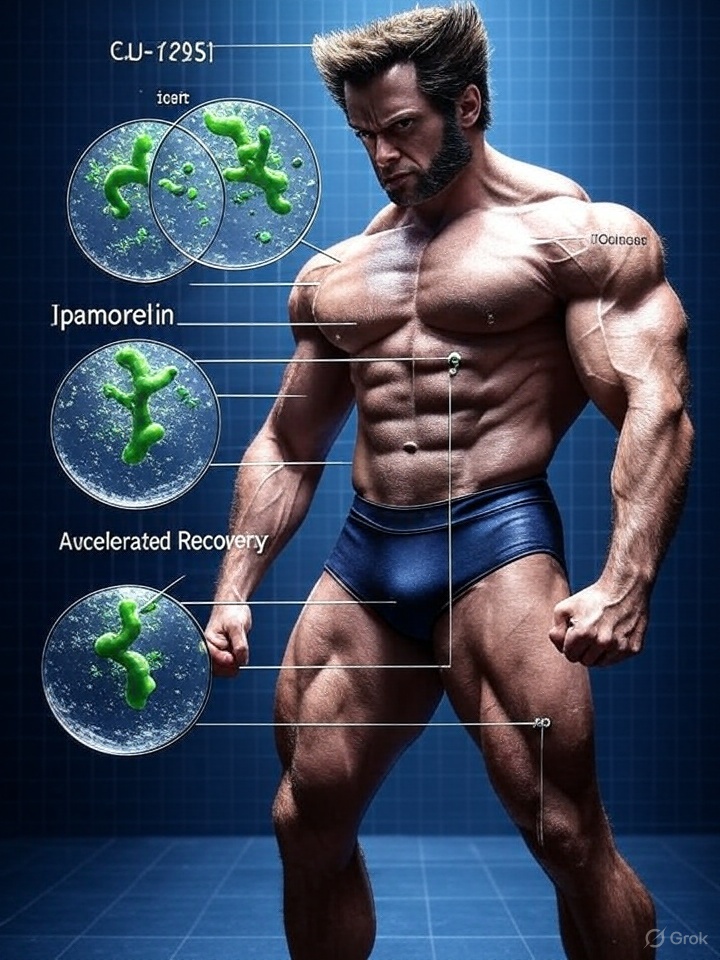
The peptides used to counteract muscle loss are typically from the GHS family. While GLP-1s are busy managing your appetite, GHS peptides like Sermorelin and the popular duo CJC-1295 and Ipamorelin are working on a completely different system. Instead of adding a hormone to your body, they act like a gentle nudge to your pituitary gland, encouraging it to produce and release more of your body’s
own Human Growth Hormone (HGH).
This natural boost in HGH is a game-changer for body recomposition. It enhances protein synthesis (the process of building and repairing muscle), cranks up your metabolism to burn more fat for energy, and improves your recovery from workouts. It’s a powerful one-two punch: the GLP-1 peptide puts you in a calorie deficit to burn fat, while the GHS peptide tells your body to build and protect muscle. The result is a leaner, stronger, and more metabolically healthy physique.
The “How It Works” Deep Dive: Your Body’s C-Suite
To make this less of a science lecture and more of a boardroom meeting, let’s think of your body as a major corporation.
The Chief Financial Officer (CFO): GLP-1 Peptides (Semaglutide/Tirzepatide) The GLP-1s are your body’s CFO. They are obsessed with the bottom line—your energy budget. They slash expenses by suppressing your appetite and improve efficiency by regulating your blood sugar. Their main job is to ensure the company (your body) runs on a deficit, forcing it to dip into its stored cash reserves (body fat) to stay afloat. They are ruthlessly effective at getting the company lean.
The Chief Operating Officer (COO): GHS Peptides (Sermorelin, CJC-1295/Ipamorelin) The GHS peptides are your COO. They couldn’t care less about the budget; they’re focused on infrastructure and production. They send memos to the main factory (the pituitary gland) to ramp up production of a critical asset: Human Growth Hormone. This HGH is then used to repair and build the company’s most valuable machinery (your muscles), improve the efficiency of its assembly lines (your metabolism), and reinforce the entire building (your bones and connective tissues).
When the CFO and the COO work together, the corporation of your body achieves its ultimate goal: it sheds its financial liabilities (fat) while simultaneously investing in and strengthening its core assets (muscle). This is the strategic genius behind the peptide stack.
The Reality Check: Risks, Costs, and the Wild West Market
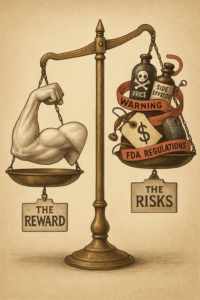
Now for a splash of cold water. This isn’t a risk-free utopia of easy body transformations. These are powerful medical therapies with real side effects and significant barriers to entry.
Let’s start with the GLP-1s. They are notorious for causing gastrointestinal issues. Margaret Josephs herself reported dealing with nausea and constipation, which are very common. In more severe cases, these drugs have been linked to pancreatitis and gastroparesis, a frightening condition where the stomach essentially becomes paralyzed.
The GHS peptides have their own set of warnings. In a major regulatory move, the FDA recently banned compounding pharmacies from producing and selling several popular peptides, including the CJC-1295 and Ipamorelin combination. The agency cited concerns over impurities, the potential for harmful immune reactions, and cardiovascular risks like an increased heart rate. This isn’t kid’s stuff; these are potent compounds that alter your body’s fundamental hormonal systems.
Furthermore, this isn’t a therapy you can just pick up at the local pharmacy. These treatments are administered under the strict supervision of physicians at high-end anti-aging and wellness clinics. And the cost? It’s substantial, often running into thousands of dollars, putting it well out of reach for the average person.
The biggest danger of all, however, lies in the unregulated online market. With the FDA cracking down on legitimate pharmacies, a shadowy world of websites selling these compounds as “research chemicals” has exploded. These products are not subject to any quality control. An analysis of black-market peptides found that a shocking
75% of products were not what the label claimed. They were under-dosed, contained a different substance entirely, or were contaminated. Buying peptides from these sources is a dangerous gamble with your health and your wallet.
The Final Word: More Than Just a Magic Shot
The peptide wave is more than just a fleeting celebrity trend; it’s a glimpse into the future of personalized medicine. The strategies being used in Hollywood and Silicon Valley show a sophisticated understanding of biology that goes far beyond simple weight loss. The goal is holistic: to optimize the body’s systems to burn fat, build strength, and improve overall vitality.
While the headline-grabbing results of GLP-1s are impressive, they are only one piece of a much larger and more interesting puzzle. The real story is in the stack—the intelligent combination of peptides that addresses both sides of the body recomposition equation.
However, this power comes with significant responsibility. The world of peptides is complex and, in many corners, unregulated. The risks of side effects, counterfeit products, and legal gray areas are very real. This is not a DIY endeavor. It’s a medical journey that requires expert guidance, reputable sourcing, and a clear understanding of the potential trade-offs.
So, the next time you see a celebrity’s jaw-dropping transformation, you’ll know there’s likely more to it than just good genes and green juice. You’ll know that they might be riding the peptide wave—a powerful, promising, and perilous new frontier in the quest to master our own biology.
Disclaimer: The content of this article is for informational and research purposes only. It is not intended to be a substitute for professional medical advice, diagnosis, or treatment. Always seek the advice of your physician or other qualified health provider with any questions you may have regarding a medical condition or treatment and before undertaking a new health care regimen. Never disregard professional medical advice or delay in seeking it because of something you have read in this article.